Leave Your Message

Top 10 Tips for Sourcing Quality Plastic Wrapper Products?

In the competitive world of packaging, sourcing quality plastic wrapper products is crucial. Industry expert Lisa Tran, founder of EcoWrap Solutions, emphasizes, "A superior plastic wrapper can elevate a brand's image." This insight highlights the significance of choosing the right products for your business needs.

Consumers increasingly prefer sustainable options. Therefore, selecting eco-friendly plastic wrappers can boost market appeal. At the same time, the quality of materials is essential. Flimsy wrappers can lead to damaged products, which can harm a company's reputation.

Navigating the plastic wrapper market can be overwhelming. There's a vast array of options, from biodegradable to traditional materials. Understanding the specifics of your requirements can help streamline the sourcing process. Quality, durability, and environmental impact should all be key considerations.
Top 10 Tips for Sourcing Quality Plastic Wrapper Products?

Understanding the Importance of Quality in Plastic Wrapper Products

Quality is critical in sourcing plastic wrapper products. Understanding its importance can greatly impact both business success and consumer satisfaction. Quality wrappers protect products, preserving freshness and integrity. They also play a role in branding, influencing customer perceptions. A high-quality wrapper can enhance the aesthetic appeal of a product. Poor quality can lead to leakage, spoilage, or damage.

One crucial aspect is material choice. Not all plastics are created equal. Some may not provide adequate protection or are not eco-friendly. It's essential to evaluate how materials are sourced and processed. This includes considering how they interact with the packaged product. A lack of compliance with safety standards can be a serious threat. Also, manufacturers should be transparent about their production practices.

Balanced supply chains are vital. Sourcing from reputable suppliers ensures access to high-quality materials. However, not all suppliers are consistent. It’s beneficial to build relationships with multiple suppliers for reliability. Regular evaluations of product performance can uncover hidden issues. Some wrappers may fail under certain conditions, like humidity or temperature changes. Continuous monitoring helps retain product quality and consumer trust.

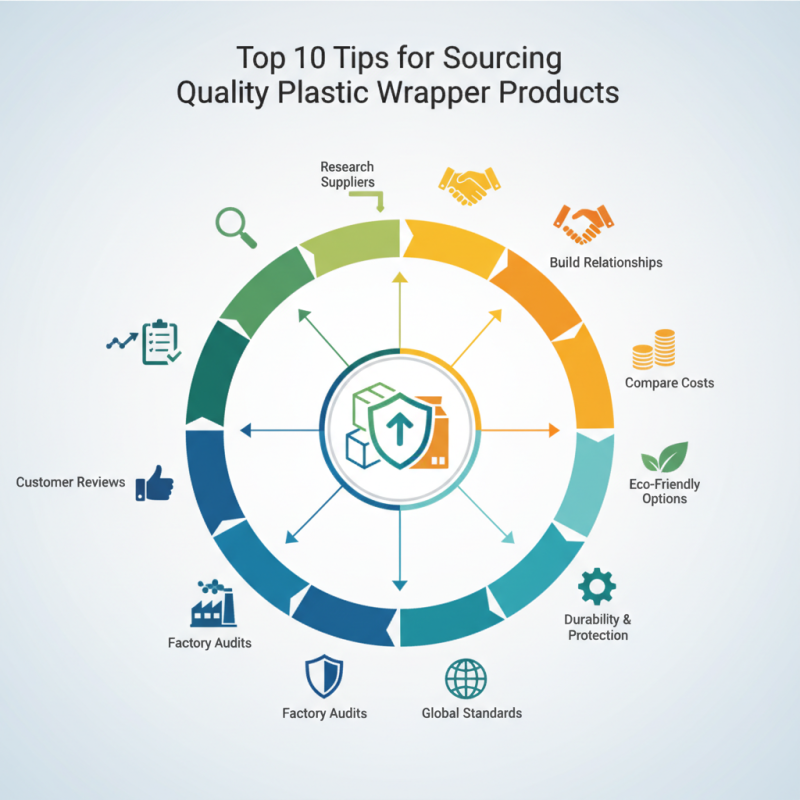
Top 10 Tips for Sourcing Quality Plastic Wrapper Products

Tip No. Tip Description Importance Validation Method
1 Research suppliers thoroughly Ensures reliability Check reviews and ratings
2 Request samples before bulk orders Evaluates product quality Conduct quality tests
3 Verify compliance with industry standards Ensures safety and quality Request certifications
4 Analyze production capabilities Assures consistent supply Request production reports
5 Consider environmental impact Supports sustainability goals Inquire about materials used
6 Establish clear communication Reduces misunderstandings Use formal communication channels
7 Negotiate favorable terms Enhances cost efficiency Discuss pricing transparently
8 Plan for logistics and delivery Ensures timely product arrival Coordinate with shipping partners
9 Assess after-sale support Builds long-term relationships Evaluate customer service availability
10 Stay updated on market trends Ensures competitive advantage Follow industry news and reports

Identifying Key Features to Look for in Plastic Wrappers

Top 10 Tips for Sourcing Quality Plastic Wrapper Products?

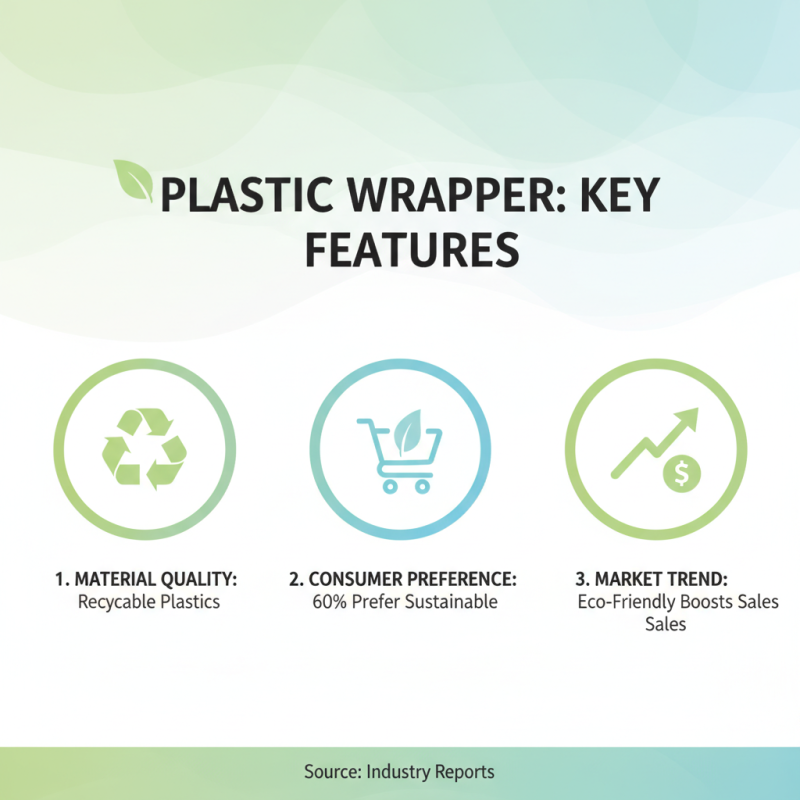
When sourcing quality plastic wrapper products, focusing on key features can greatly impact the overall effectiveness. Material quality is crucial. High-quality plastics are often recyclable, reducing environmental impact. Reports indicate that around 60% of consumers prefer sustainable packaging. This trend pushes manufacturers to adopt eco-friendly options, which can also influence purchasing decisions.

Thickness is another important feature. Thicker wrappers generally provide better protection, ensuring products remain fresh longer. A study found that 75% of food products lose quality due to inadequate packaging. This statistic highlights the importance of investing in robust materials. Additionally, evaluate the seal strength. A reliable seal prevents contamination and maintains product integrity. Insufficient seals can lead to spoilage and increased waste.

The design and usability of plastic wrappers shouldn't be overlooked. Innovative designs, such as resealable options, enhance user experience. They often lead to reduced waste as consumers can preserve leftover products. However, many products still fall short on usability, needing improvement in design strategies. It’s essential to choose wrappers that not only protect but also offer convenience for consumers.

Evaluating Suppliers: What Criteria to Consider

Top 10 Tips for Sourcing Quality Plastic Wrapper Products?

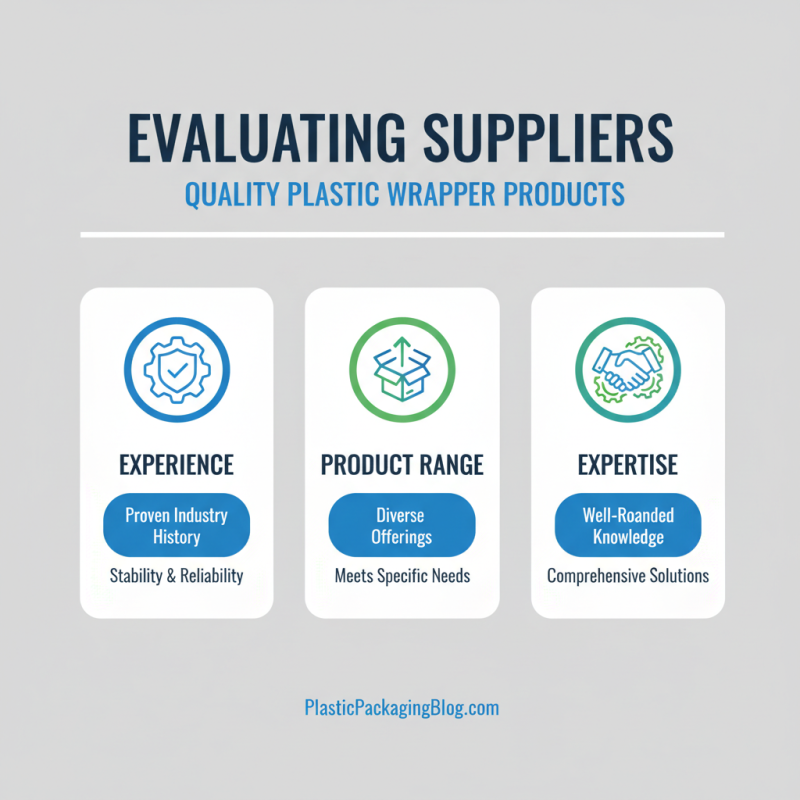
When evaluating suppliers for quality plastic wrapper products, several criteria must be considered. Look for suppliers with proven experience in the industry. Longevity in business often indicates stability and reliability. Additionally, examine their product range to ensure they can meet your specific needs. Comprehensive offerings can be a sign of well-rounded expertise.

Quality assurance is crucial. Ask suppliers for certifications and compliance with industry standards. This documents their commitment to quality. It's important to request samples before making large orders. Evaluating the material's durability and flexibility can provide insights into the overall product quality. Don't shy away from questioning any inconsistencies in their production processes.

Lastly, assess communication and responsiveness. A reliable supplier should provide clear answers and timely responses. This reflects their customer service standards. Consider how they handle feedback and complaints. A good supplier embraces constructive criticism, indicating a willingness to improve. Trust your instincts; if something feels off, it may be worth reevaluating your options.

Conducting Material and Durability Tests on Plastic Wrappers

Conducting material and durability tests on plastic wrappers is essential for ensuring product quality. These tests help determine if the wrappers can withstand various conditions without compromising integrity. The global packaging industry witnesses an annual growth rate of about 3.4%, highlighting the increasing demand for reliable materials.

One crucial aspect is evaluating tensile strength. Studies have shown that plastic wrappers must endure forces during transport and handling. On average, wrappers with a tensile strength of at least 25 MPa perform better. Testing also involves exposure to extreme temperatures. A report indicates that wrappers that maintain flexibility at temperatures between -20°C to 50°C tend to be more durable.

Another vital test is the permeability assessment. Products need to prevent air and moisture from entering. Research indicates that effective barriers can reduce spoilage by 20%. Many manufacturers overlook these tests, assuming standard materials are sufficient. However, inadequate testing can lead to product failure and consumer dissatisfaction. Hence, prioritizing rigorous testing protocols is necessary for quality assurance in plastic wrappers.

Building Relationships with Reliable Manufacturers for Quality Assurance

Building strong relationships with reliable manufacturers is crucial for sourcing quality plastic wrapper products. According to recent industry reports, over 70% of companies prioritize supplier relationships to ensure consistent quality. Establishing effective communication channels can help identify potential issues early, reducing costly errors. Assessing a manufacturer’s quality control processes is vital. Visual audits and supplier certifications can provide insights into their operational standards.

Consider engaging in direct conversations with manufacturers. Ask questions about raw materials, production methods, and sustainability practices. This not only fosters a transparent environment but also shows commitment to quality. Research indicates that 65% of successful partnerships stem from mutual trust and understanding. Building that trust requires time, effort, and sometimes facing uncomfortable truths about a manufacturer’s capabilities.

Be prepared to evaluate and reassess your partnerships regularly. Industry data suggests a continuous improvement mindset is essential. Even trusted suppliers may face challenges, from delays to fluctuations in quality. Keeping an open line of communication allows for adjustments and solutions to be discussed promptly. This proactive approach can safeguard your product's integrity while enhancing overall partnership longevity.

Top 10 Tips for Sourcing Quality Plastic Wrapper Products