Top 10 Seal Packaging Solutions Every Business Should Consider
In today's competitive market, the significance of effective Seal Packaging cannot be overstated. As businesses strive to enhance product integrity, maintain freshness, and improve presentation, packaging solutions have evolved, providing essential support in various industries. According to Dr. Emily Hart, a leading expert in packaging technology, "The right seal packaging solution not only protects the product but also communicates brand value and quality to the consumer." This statement underscores the dual role that seal packaging plays in both preservation and branding.
The array of seal packaging options available allows businesses to select solutions that best fit their specific needs, ensuring that product life is extended while also appealing to customer preferences. From vacuum sealing to heat sealing, each method presents unique benefits tailored to different products and market demands. Companies looking to streamline their operations and enhance consumer satisfaction can greatly benefit from exploring the top seal packaging solutions best suited for their products.
As we delve into the top 10 seal packaging solutions every business should consider, it becomes clear that the right choice can significantly impact overall performance. Whether you’re a small startup or a large enterprise, investing in innovative packaging solutions is paramount to ensuring product quality and maximizing customer trust.
Understanding Seal Packaging: Importance and Benefits for Businesses
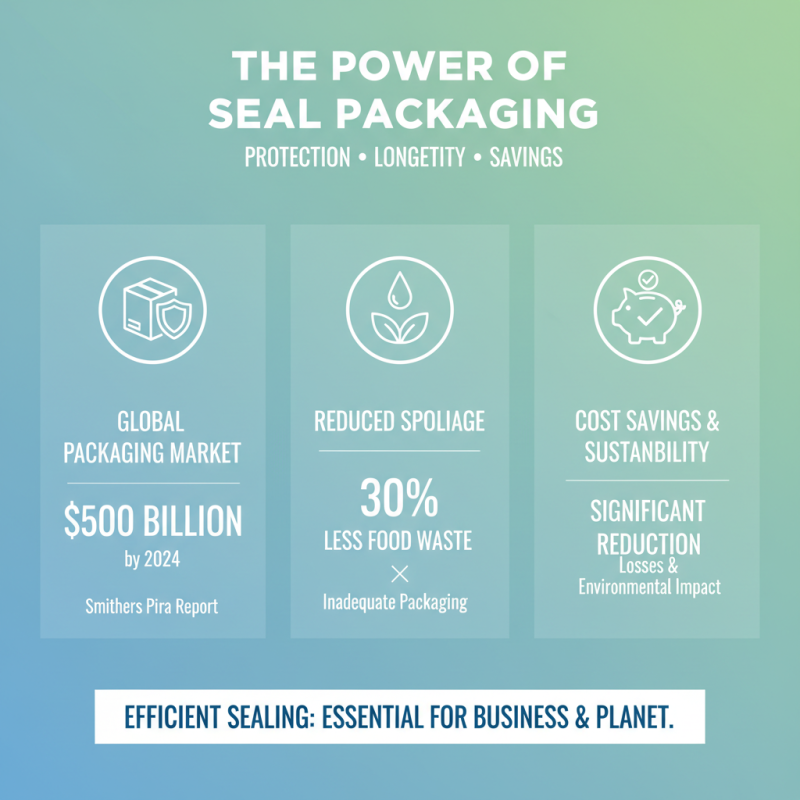
Seal packaging plays a pivotal role in protecting products and enhancing their shelf life, making it an essential consideration for businesses across various sectors. According to a report by Smithers Pira, the global market for packaging is projected to reach $500 billion by 2024, with a significant portion attributed to innovations in sealing technologies. Efficient seal packaging not only safeguards products from contamination and damage but also reduces spoilage, which can lead to substantial cost savings. Research indicates that up to 30% of food products are wasted due to inadequate packaging. Thus, adopting effective seal solutions can mitigate these losses while promoting sustainability.
The benefits of seal packaging extend beyond just protection; they also influence consumer perception and brand loyalty. A survey conducted by Packaging Insights revealed that 67% of consumers consider the quality of packaging as an essential factor in their purchasing decisions. Furthermore, advanced sealing techniques, such as vacuum sealing and heat sealing, have been shown to enhance the presentation of products, making them more appealing on retail shelves. By investing in modern seal packaging technologies, businesses can not only improve product longevity but also foster a positive consumer experience, ultimately driving sales and growth in today's competitive market.
Types of Seal Packaging Solutions: An Overview of Common Methods
Seal packaging solutions are integral to ensuring product integrity and customer satisfaction across various industries. Common methods of seal packaging include heat sealing, vacuum sealing, and adhesive sealing. According to a report from Research and Markets, the global packaging market is projected to reach $1 trillion by 2024, driven by increasing demand for reliable and sustainable packaging solutions. Among these, heat sealing is one of the most widely used techniques, wherein heat and pressure are applied to two thermoplastic surfaces, providing a hermetic seal that extends shelf life.
Vacuum sealing, another prevalent method, removes air from packaging, reducing the risk of spoilage and degradation. This technique is particularly important in the food sector, with market research indicating that vacuum packaging can extend food preservation by 2 to 5 times compared to traditional packaging methods. Moreover, adhesive sealing combines various types of adhesives to create a strong bond, ensuring durability during transportation. This method is seeing significant growth, with the adhesive packaging market expected to grow at a CAGR of 4.5% through 2026, highlighting the increasing preference for efficient and reliable packaging solutions that enhance product security.
Incorporating these sealing methods not only helps in maintaining the quality of products but also plays a role in sustainable practices. Many companies are moving towards eco-friendly adhesive solutions and recyclable materials, responding to consumer demands for sustainability. As businesses continue to adapt to market trends, understanding these seal packaging methods will be crucial for successful product delivery and enhanced customer experiences.
Top Materials Used in Seal Packaging: Pros and Cons
Seal packaging is an essential component for businesses looking to enhance product preservation and ensure customer satisfaction. The materials used in seal packaging can significantly impact both the functionality and sustainability of the packaging solution. Understanding the pros and cons of various materials can help businesses make informed decisions.
Plastic, for instance, is widely used due to its versatility and moisture barrier properties. However, concerns about environmental impact have led to heightened scrutiny, as the plastic waste crisis is projected to escalate, potentially reaching 1.3 billion tons by 2040 according to a recent industry report. Alternatives such as biodegradable films offer a more sustainable solution, but they may not always provide the same level of durability and shelf life as traditional plastics.
Glass packaging, on the other hand, is often praised for its recyclability and ability to preserve product integrity. Yet, businesses must consider the higher transportation costs and potential breakage associated with glass. Additionally, metal packaging provides excellent barrier properties but may lead to metallic taste issues in sensitive products.
Tips: When selecting packaging materials, consider lifecycle assessments to understand the long-term impact on the environment. Engage with suppliers who prioritize sustainable practices to enhance brand image and meet consumer demand for eco-friendly options. Additionally, conducting market research to identify customer preferences can inform packaging material choices, ultimately driving consumer trust and loyalty.
Top 10 Seal Packaging Solutions Every Business Should Consider
| Packaging Type |
Material |
Pros |
Cons |
| Vacuum Packaging |
Polyethylene film |
Extends shelf life; reduces oxidation |
Requires specific machinery; not recyclable. |
| Shrink Wrap |
Polyolefin |
Versatile; provides a tight seal |
Higher cost than other films; not biodegradable. |
| Blister Packaging |
PVC |
Tamper-proof; excellent visual appeal |
Limited product fit; higher manufacturing costs. |
| Pouch Packaging |
Laminated films |
Lightweight; easy to store |
Less durable; can be punctured easily. |
| Case Sealing |
Corrugated cardboard |
Sturdy; recyclable |
Heavy; requires space for storage. |
| Heat Sealing |
Polyester film |
Strong seal; good barrier properties |
Requires heat sealing equipment; energy intensive. |
| Metallic Foil Packaging |
Aluminium foil |
Protects from light and moisture |
Less sustainable; can be expensive. |
| Combination Packaging |
Various substrates |
Flexible; tailored to product needs |
Complex to produce; higher costs. |
| Eco-Friendly Packaging |
Biodegradable materials |
Sustainable; reduces environmental impact |
May not be as durable; higher cost. |
| Tamper-Evident Packaging |
Specialty films |
Increases consumer safety; visible tampering |
Can be more expensive; may require specific design. |
|
Choosing the Right Seal Packaging Equipment for Your Business Needs
When it comes to selecting the right seal packaging equipment for your business needs, it’s essential to evaluate your specific requirements and operational goals. Different industries may necessitate different solutions; for instance, a food production facility may prioritize hygiene and freshness, while an electronics manufacturer may focus on protecting sensitive components from moisture and dust. Understanding your product specifications and storage conditions is key to finding the optimal sealing solution that ensures product integrity and customer satisfaction.
Tips: Always assess the scale of your operations. If you're a small business, you might start with manual or semi-automatic sealing equipment, which can be cost-effective and still deliver reliable results. Consider the type of materials you will be sealing to ensure compatibility with your chosen machinery. Moreover, exploring options for adjustable settings can enhance flexibility, accommodating various products and packaging sizes.
Investing in the right seal packaging technology not only enhances product protection but also contributes to overall efficiency and cost savings in the long run. Be sure to evaluate the user-friendliness of the equipment and the level of training your staff may require, as this will affect overall productivity. Regularly reviewing and updating your sealing process can also lead to better performance and alignment with evolving market demands.
Sustainability in Seal Packaging: Eco-Friendly Options to Consider
Sustainability has become a crucial consideration for businesses across various sectors, and seal packaging is no exception. As consumers increasingly demand eco-friendly options, businesses must adapt their packaging strategies to reduce their environmental impact. One of the simplest ways to achieve this is by choosing biodegradable materials that decompose naturally, minimizing waste in landfills. Another option is to explore reusable packaging solutions, which not only cut down on waste but also promote a circular economy.
When implementing sustainable seal packaging, consider these tips:
- First, assess your current packaging materials and identify areas where you can switch to eco-friendly alternatives. Materials like compostable films or recycled paper can often serve as viable replacements.
- Second, evaluate your sealing methods to ensure they are energy-efficient. Techniques such as heat sealing can minimize energy use while providing a robust seal.
- Lastly, educate your customers about your sustainable practices; transparency fosters trust and encourages patronage from environmentally-conscious consumers.
By prioritizing eco-friendly seal packaging solutions, businesses can contribute to sustainability efforts while also positioning themselves favorably in a competitive market. Implementing innovative packaging strategies not only benefits the environment but can also enhance
brand loyalty and attract a broader audience committed to ethical practices.